
































Talk about girl power. Whew.
The spin-off successfully marries the past and the present. It feels both familiar and rejuvenated.
Sarah Steele’s hilarious delivery as Marissa Gold is pretty much the only element of escapism in this show.
The show is grounded in reality. The current political climate is the perfect plot device.
Guest stars galore! (Matthew Perry, Carrie Preston, Dennis O'Hare, etc.)
This spin-off takes a more nuanced stance on the law – showcasing its complexity through relatable cases.
Lucca & Colin having milkshakes & sex. Steamy.
The writing is problematic when it tries to tackle racial issues. You'd think The Kings had learned from The Good Wife.
While interesting on paper, the title sequence seems to have been an afterthought.
Julius Caine’s personal struggle in voting for Trump was could have been groundbreaking - but wasn't.
Maia’s arc felt disconnected. While her character served as the catalyst for the main story, we were never sure how to feel about her.
Figuring out how to deal with their ten-episode narrative structure, the writers obviously struggle to plan out the arcs.
The Good Fight respects an extensive legacy while steadily settling into its own. Forced to navigate Trump’s America, this spin-off blows up the familiar without hesitation.
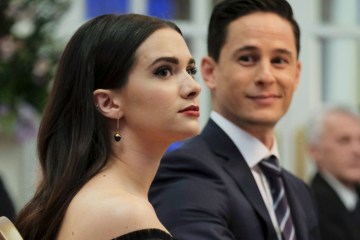
After an unsuccessful marriage and an unexpected Trump presidency, Diane Lockhart (Christine Baranski) decides to retire as name partner from one of Chicago’s leading law firms. As a final act of kindness, Diane offers to mentor her god-daughter Maia Rindell (Rose Leslie) during her last weeks in office.
When Maia’s father (Paul Guilfoyle) is arrested for running a multimillion-dollar Ponzi scheme, Diane is unceremoniously ousted from her firm as both her savings and her legacy are wiped out. After being labeled ‘poisonous” because of her close ties to the Rindells, it is opposing counsel Adrian Boseman (Delroy Lindo) who is prepared to take her and Maia in.
RELATED | Everything you need to know about The Good Fight
After only a few minutes, one thing becomes glaringly obvious: this show has purpose and there are things left to say. The Kings didn’t create The Good Fight to milk CBS’ golden cash cow. Diane feels like the perfect character to explore at a time of such civic divide. Even though the show’s creators had expected a Clinton win in November, Lockhart’s storyline feels invigorated by the current political climate – serving as the ultimate catalyst for what’s to come.
While powerhouse Christine Baranski gets top billing, the show is not just hers to carry. the real thread of the series runs with Diane’s goddaughter, Maia. Having just passed the bar, she feels like an Alicia Florrick-proxy right from the beginning. While the first season of The Good Wife explored the political nature of its scandal, this spin-off investigates the personal lives of the people touched by it – explaining why we ended up with three leading women instead of just one.
While Maia’s storyline is central to the first season, the other leading ladies get to have plenty of fun. No longer a pawn to her (former) friend Alicia, Lucca Quinn is finally able to stand on its own in a world full of corporate suits. Her stone cold delivery upon meeting Diane for the first time in a year hints at a rift of some sort - one that we never got to explore in this first season.
A show with purpose is a show destined for success.
The kings devised a masterful strategy for launching their Good Wife spin-off. They took it slow – and it paid off. Instead of launching the show with a batch of new characters, they gave us time to reconnect with Diane. At the beginning of the pilot, things were as we last left them but over the course of an hour, we transitioned with the character as she adapted to a new reality. The Good Fight really starts at episode two, but taking the time to ease the audience into this new environment was a clever move.
The reason this show works so beautifully is because it just makes so much sense. In our experience, reboots tend to fail because they are either exactly the same or completely different from the original show. While the pilot is a little heavy on exposition, it’s a necessary evil. The first hour documents the transition from The Good Wife into The Good Fight, shedding any excess baggage and effectively draining the swamp.
The secret that makes The Good Fight feel so close to the original lies in its set-up. Both shows explore what happens when a woman unwillingly falls victim to scandal. Where The Good Wife opened with Alicia being launched into the national spotlight, its successor focuses on the more intimate side of things – which is satisfying as we never really got to see Diane’s weak side.
RELATED | Everything you need to know about The Good Fight
When working on The Good Wife, the showrunners often mentioned the pressure of producing 22 compelling episodes each season. While creating that much content is a daunting task, The Kings learned that there were several upsides to having a larger episode order - time being one of them. Unlike its predecessor, The Good Fight only has ten episodes to make its case. Instead of successfully breaking free from the chains that shackled them to network restrictions, the writers quickly settled into their old routines. Occasionally forgetting every hour should matter, this spin-off showed clear signs of growing pains.
After prematurely wrapping up the most compelling storylines halfway through the season, we were left wondering what direction the show would take in its subsequent hours. The writers obviously struggled - bringing in several interim villains that served merely as a band-aid for a much larger issue. While the show quickly recovered, it exposed the difficulty of only having to write ten episodes per season. There is simply no room to watch characters evolve in their daily lives, actually practicing the law. While The Good Wife felt drawn out at times, it allowed the time for characters to grow and evolve professionally. In this particular case, the courtroom no longer seems to be their most important arena - and that’s a shame. Some of Maia’s best scenes just showed her kicking ass in court.
While it’s understandable the writers want to pounce ahead at a staggering pace, we can’t understand why they would sacrifice precious time in court to serve up filler content instead. Some of the cases of the week are intriguing but don’t drive the plot forward in any way. It’s obvious The Kings were figuring out how to develop arcs in ten episodes - rather than 22.
For now, we forgive them. As long as they don’t make the same mistakes in the show’s sophomore season.
Trump’s America - the alt-right is all wrong.
Sometime before Election Night, The Kings pitched The Good Fight to a room full of executives over at CBS. While Diane Lockhart lost most of her legacy, she would find redemption in starting over as she learned what it meant to be on the right side again. A few months after the election, Robert & Michelle King were forced to drastically alter their pitch as we saw Trump become the 45th president of the United States. The Good Fight was no longer a story of redemption – but one of awareness.
The unexpected political climate drove The Kings to peel back an extra layer of substance, identifying the issues rather than fighting them. It makes you wonder what this spin-off would have looked in a different political climate. Would it still have felt this current? While the show feels less like entertainment now and more like a social critique, the election of Donald J. Trump adds conflict and tension – and that’s always a good thing.
RELATED | The Good Fight 1×01 & 1×02 – Premiere Review
As a result of Trump’s win in November, we had assumed that references to the new administration would be kept to a minimum in order to save time and money – but, boy, were we wrong.
For the past ten weeks, we have been mulling over the significance of a character like Julius Caine (Michael Boatman). While there is tremendous potential for him to break out of old habits, the writers don’t seem to recognize the opportunity. Ever since The Good Fight started airing, Julius Caine has been ‘the counterargument’, the other voice. While most of the cast portrays liberal characters adhering by leftist ideologies, Caine is the sole Trump-voice in an African-American law firm. That should be interesting, layered and nuanced television – but it isn’t.
When Julius defends the alt-right abuse by invoking the 1st amendment, he displays a lack of compassion that only Donald Trump himself could appreciate. Failing once again to further develop his political beliefs, Julius quits the firm at the end of episode five. While he returns later in the season to help oust Adrian, there is no hope of him ever becoming a three-dimensional character. Instead, he’ll just end up a boilerplate villain. Shame.
Guest stars: queen for a day.
One thing that The Kings have mastered with this show is blending the past with the present. While they – appropriately – bring back familiar faces (judges, guest actors, etc.) on a regular basis, they do so in a carefully constructed way. Instead of emphasizing the return of those fan favorites, the writers rely on them only to touch upon recent themes and topics of public concern. It’s a clever way to bring new ideas and characters into the show without actually alienating the core fanbase.
Even though the return of these fan favorites usually has a purpose, the playing field starts to feel a little crowded just ten episodes in. In a way, it feels like The Kings assumed they would only get one season out of this spin-off - essentially bringing back all of the characters fans were so eager to see. While we haven’t been able to catch up with the heavyweights such Cary Agos (Matt Czuchry) and Kalinda Sharma (Archie Panjabi), we’ve covered pretty much everyone else.
RELATED | The Good Fight 1×03 – “The Schtup List” review.
While this reboot still takes place in the same universe as its predecessor’s, the narrative is no longer restricted by Alicia Florrick’s presence. The clean break offers the characters something they had been craving all along: attention. Now that guest stars are no longer dependent on Florrick, they have been successfully set free - allowing us a chance to rediscover their true nature. Even though Alicia’s presence looms, the characters are no longer doomed to merely serve as a foil.
When The Good Wife introduced Matthew Perry’s character back in season three, the part remained tragically underdeveloped – failing to make a lasting impact on the show. Bringing back the character was an appropriate – albeit risky – move from the producers of this spin-off. Pairing him up with the fabulous Elsbeth Tascioni (Carrie Preston) proved beneficial for the both of them. After seven seasons of quirkiness and bizarre behavior, Tascioni had lapsed into over-the-top territory – tragically turning the beloved character into a caricature of her former self. In the presence of Kresteva, she rose from the ashes like a Phoenix.
The Kings also brought back Mr. Bitcoin (Jason Biggs) and even Colin Sweeney (Dylan Baker). While all of the characters seemed at ease in this updated universe, Sweeney’s arc felt misplaced. When he was first brought in during The Good Wife, he insisted on being one of Alicia Florrick’s clients. Whenever Sweeney popped up in subsequent seasons, he never took no for an answer – manipulating Florrick into taking his cases at any cost. It feels out of character for him to show up to RBK, simply because Florrick “couldn’t take his case”. He’d do anything for some quality time with Al-e-cia.
Final Verdict: The Good Fight’s first season offers a more nuanced look at the law - employing past villains to tackle current issues.
With Henry running off and his daughter facing charges as a co-conspirator to fraud, The Good Fight definitely has new material to explore in its upcoming second season. Maia’s arc never connected with the audience as we perceived her to be weak - choosing a broken family above the law. Stripped from the illusion that her father would sacrifice himself for the greater good, the character will finally be able to focus on what’s ahead. Maybe she will even become an ice queen - just like Lucca has.
Ultimately, the biggest problem with this show lies not in its directing, writing or acting. It lies with its platform, CBS All Access. It’s difficult to review a show voraciously when it’s being confined to an inferior online medium. Keep in mind: this is not Netflix (or even Hulu). Had anyone even ever heard of CBS All Access before The Good Fight was announced? We’re confident this show has an audience. But would we pay six bucks a month to watch it? Well, let’s just say this: would we pay six bucks for anything these days?
All in all, The Good Fight is off to a Good Start. Successfully blending the past with the present, CBS did the right thing rebooting this show. While The Good Wife casts a big shadow, its spin-off has proven to be a giant of its own kind. And more imortantly: it has a big heart and whole lot of purpose.