




























It’s an almost ancient form of storytelling now, among the girl power, the dominance, the grittiness and darkness—but belief gives us light (or not) and it’s about time we explored it.
Belief.
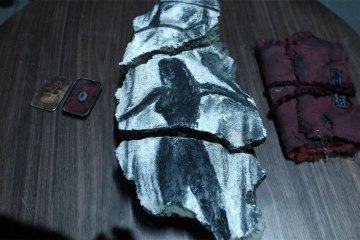
It is a theme you’ll regularly visit when watching or reading American Gods. In American Gods, Gaiman’s Gods of the old and new feed on ‘regular’ people’s belief in them. It’s the reason why the old gods are beginning to rumble (sorry, Easter—that Jesus is one numpty) and the new gods are arrogant and superior. In particular, we see the Bruce Langley’s Tech Boy—swift, upgrading, ever-changing—just like apps, iPhones…he’s unbeatable, he’s youthful and he knows it. He embraces it.
In American Gods, belief is a symbol of power. If your people fade in their belief in you, you—as a God—will find yourself fading too. You’ll find other ways of consuming other people’s powers. Most memorable is perhaps Bilquis’ erotically gruesome (what?) way of handling things.
Shadow (Ricky Whittle) is one to be hauled out of prison and straight into Mr. Wednesday’s (Ian McShane) line of fire. Shoved into the world of gods and dead wives, Shadow’s an ordinary man who’s not so ordinary who experiences the extraordinary.
Did that make sense?
But belief is something that is paramount across television. From the early beginnings, a producer must believe in a writer to get something on the screen. They must believe in the scripts and direction and the actors. Though once it’s on-screen, let’s ignore the power American Gods yields and have a look at where belief…kind of goes wrong.
Belief and Tragedy: do the two mix?
The short answer to that is ‘yes’.
We’ve seen it so many times before. Most recently, Bea Smith (Danielle Cormack) from Wentworth ran into a mind-burning, unforgettable death. Her cause? She believed. She knew Ferguson (Pamela Rabe) had caused her then-girlfriend Allie Novak (Kate Jenkinson) to go into hospital. But it was her steadfast belief in Allie’s promises, that she was ‘off the gear’, that led her to think this. It was also Ferguson’s malice. But Allie’s astonishing recovery couldn’t be foreseen by anyone, and so Bea Smith died a tragic hero, for her women, for her love and for her unwavering belief that Allie would not betray her again.
To talk of the headline-hitters, Clarke and Lexa from The 100 (Eliza Taylor and Alycia Debnam-Carey) believed so heavily in their newfound alliance that it ultimately had the Commander killed. Perhaps it was blind love that had her shot. Perhaps it was Titus’ (Neil Sandilands) incapability to see his Commander go against his beliefs: that love was weakness.
Whatever it was, Lexa just had the coalition turning around—and was shot for it. Yes, it was an unfortunate and primary example of the ‘Bury Your Gays’ trope but it was also a struggle for belief. Lexa believed so much that she could change the world. We can only hope she didn’t do so in vain.
Lost and Found: is it okay to sometimes believe the impossible?
If you ask Neil Gaiman, he’ll stare at you and say ‘of course’ (we…believe). But this was exemplified in Person of Interest. Root (Amy Acker) and her relentless hunt for Shaw (Sarah Shahi) was a prime example of unwavering belief. Even though Root had seen with her own eyes Shaw getting gunned down in the fourth season, she never saw the head-shot. Neither did we. Person of Interest is one of those shows that don’t leave you hanging. By the next episode we saw Shaw alive, and so the chase was on.
Root’s belief in Shaw never flickered. Not in the search, and certainly not when she came back. Not even in the simulations, when Shaw’s depiction of how everyone thought of her was warped and almost dimmed. She had Finch (Michael Emerson) as the busybody who never searched for her, and John (Jim Caviezel)—one-half of the infamous ‘Mayhem Twins’—barely even spare her a few sentences. Everything screamed ‘traitor’. Except for Root.
Their reunion was short-lived, but it was sweet. And in some ways, though the ending did some viewers injustice, we can take solace in the fact that Root’s belief in Shaw was not unrequited. Even at the end, when Shaw picks up then telephone and hears The Machine’s voice, her smirk at the camera knows that she has to go on. She has to believe that voice in her ear.
And that voice is Root.
Belief forms a twisted, clone-like family. Yeah, it really does.
Now there’s something for a bold statement.
However, Orphan Black was a bold premise the moment it shot out of BBC America’s behind. With Emmy winner Tatiana Maslany managing to hold the fort for about eight or nine characters(!) including hippie, pot-smoking Cosima, hard-nut Sarah, prissy Alison and royal queen of the tossers Rachel, it’s a genuine wonder how she didn’t win the award earlier.
As the seasons of Orphan Black have progressed, a running theme is family. Sarah has Mrs. S (Maria Doyle Kennedy), Felix (Jordan Gavaris) and Kira (Skyler Wexler). Alison has Donnie and the kids. Cosima’s alone. But what the clones find is that together, they are a greater force.
Judging by the season five (and last) trailer, it looks like the clones are ready for all-out war. They have been oppressed, kidnapped, threatened (everything they say in the video, basically) and they are out for revenge. You and who’s army? Perhaps you’d like to say that.
Take a look at Helena and then ask the question again. It’s taken five seasons but the clones have finally welded belief in each other, and from that comes strength. From that, comes war against the people who control them; the people who think they’re anything but human.
Neolution: you’d better watch out.
Lucifer…Just…Lucifer.
Lucifer is one of those programmes that is both inherently charming, utterly off-its-nuts and absolutely brilliant. Tom Ellis’ comedic timing is impeccable, as the sharp-suited devil himself. His chemistry with Lauren German’s Chloe Decker has been something the fans have been craving for a very long time. His bold declaration of love for her at the end of season two’s midseason left us wanting more for the duo. But it’s Lucifer’s very first landing that has us cackling.
So far, we’ve discussed the tragedy, the family and otherworldly that happiness can give us. Well, it can also give us a heavy dose of suspension of belief, too. Lucifer is impossible not to roll your eyes at—but in a good way. It’s the type of programme that knows it’s bonkers, and instead of trying to play it cool and gritty, it runs away with the comedy and melodrama and brings home a truly diverse, wonderful piece of work.
There’s nothing quite like it on television. If we told you it was a procedural/supernatural/real-devil/the heroine may be a fabrication of God/the devil’s mother is kind of attractive—would you honestly ditch us as an outlet? (Please don’t).
But that’s exactly what it is. The cast and crew are proud of it. We’re proud of it. Belief is a heavy theme. So it’s a damn good job that
Lucifer sprinkles a bit of a mischievous light on it.
Ultimately, ‘belief’ is a running theme in all our key shows. It just so happens that they’re all meshing now to one big pool of excellence.
So far, it’s all been about girl power, or dominance, or spies—you name it. But ‘belief’ is such a simple and near-ancient form of storytelling. It’s only now getting the spotlight because we’re reading into our television series and our books more.
Wynonna Earp must have had one hell of a first season trying to convince SyFy and its viewers that Emily Andras hadn’t gone bonkers. The idea of the descendent of legendary frontier lawman Wyatt Earp—with an immortal Doc Holliday, by the way—killing off demons in the form of Wyatt’s conquests? The pitch itself must’ve been a field day for the producers and CEOs up there. But they believed in the production and they birthed something that has joined fans all across the world.
And so it is simple. Belief comes with tragic storytelling: that is a fact. It has been shown, and it has been done. Perhaps it could’ve been done more eloquently, but with belief comes hope. It’s something that we can never let bog us down. Even when all the belief is quashed from the world, there is a light somewhere that shimmers.
Don’t blow it out. Take on another show if you have to. Keep that candle burning. As Root put it so beautifully in Person of Interest:
“You once told John the whole point of Pandora’s Box is that once you’ve opened it, you can’t close it again. She wanted me to remind you of how this story ends. When everything is over, when the worst has happened, there’s still one thing left in Pandora’s Box: hope.” – Root (‘Deus Ex Machina’, Person of Interest).