
















The last six episodes of Philip K. Dick’s Electric Dreams define humanity and life–with a magical touch of sci-fi
Philip K. Dick’s Electric Dreams is a journey that combines man’s quest for humanity and sprinkles it ever so slightly with a touch of sci-fi. The last six episodes of the first season are a testament to understanding the human mind and our deepest desires and wants. Each episode explored what it means to be human but also ties in concerns of the modern world. We followed the episode order released on Amazon Video–and will discuss it accordingly.
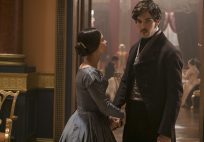
The fifth episode, “The Hood Maker”, starring Richard Madden (Game of Thrones) and Holliday Grainger (The Finest Hours), showed us a world filled with telepathic individuals being used by the government. It illustrates the fine line between trust and love in a world where one’s thoughts are constantly exposed. And explores the question, what or who can we truly trust?
The next episode in the series was “Safe and Sound” starring Annalise Basso (Captain Fantastic) and Maura Tierney (The Affair). Perhaps the most frightening episode of the bunch, “Safe and Sound” explored a world where society is split into “bubbles” and technological devices track your every move. Sound familiar? This episode focused in on paranoia surrounding the feeling of constantly being watched and targeted–and made for some moments way too close to home.
“The Father Thing” was the seventh episode in the series and stood out as the most unique (in term of themes) and was oozing sci-fi from its very core. Starring Greg Kinnear (As Good As It Gets), the story involved all the elements of a true sci-fi tale–alien abduction, aliens taking over a town, and mysterious objects floating out of the sky. In a homage to Body Snatchers, this episode told the tale of a boy fighting against an alien who seemingly takes over his father’s body.
RELATED | Electric Dreams Roundtable 1×01-1×04
“Impossible Planet”, starring Jack Reynor (Transformers), Geraldine Chaplin (Doctor Zhivago), and Benedict Wong (Dr. Strange), was the most visually magnificent episode of the ten. Set in the distant future, it told the story of an elderly woman trying to visit Earth–based on stories told by her grandmother. It made for an emotionally jarring, ambiguous tale that left us questioning the end.
Next, we had “The Commuter” starring Timothy Spall (Harry Potter) which begged the question–what if we could have a different life? This episode tells the story of a train station agent who leads a difficult life. Unusual circumstances provide him with a different version of his life–one he never saw coming.
The final episode in Electric Dreams, “Kill All Others”, starring Mel Rodriguez (Last Man On Earth) and Vera Farmiga (Bates Motel), was an all too familiar insight into hate speech and social/political commentary. It explores the repercussions and impact of hate speech in a society that leads to murders, attacks–and a one-party political system.
Those six episodes were something else, right? Now, let’s meet our roundtable and get to discussing all that went down!
A.A. Rubin (@TheSurrealAri)– writer of literary fiction, sf/f, and comics; English teacher; reviews for @moviepreshow
Christine (@hotgreenteamama)– writer and I drink tea and I know things, including way too much about TV
Shemal (@shemjay93)– Sri Lankan, Passionate geek, Movie buff, TV addict, live tweeter
Steve (@SalyerSteve)– My path to Geekdom began in the 60s watching Star Trek, TOS, and Doctor Who and began podcasting about shows I love in 2013
Courtney (@CourtneyPerdue1)– Writer, voice actor, avid shower singer
[wp_ad_camp_2]

1. ‘The Hood Maker’ depicted a world where telepaths became a form of surveillance used by the government. What did you think about this premise and how it relates to our world today?
A.A. Rubin (@TheSurrealAri): In our time, while there aren’t invasive telepaths, there is a pressure to reveal one’s thoughts on various social media platforms and the like. While no one can read what you are thinking, there is a group think aspect that strikes me as similar in this episode—but more so for the ‘teeps’ than for the normals. Once one of the ‘teeps’ thinks something, they all do. The groupthink is just as invasive for them as the mind reading is for the so-called ‘normals.’ It is their plight that strikes me as most similar to our own. How can you get off the network, and what are the consequences of that decision?
Christine (@hotgreenteamama): I think many of these episodes share a sense of paranoia that the government is monitoring your every move with tech. In this episode, the government was using not technology but other people for their monitoring. The teeps were already ostracized from society, so they had nothing to lose in cooperating with “authority.” I think Honor realizes by the end she shouldn’t have trusted the police as they were they were using her. I suppose it correlates to our world almost like the idea of “snitching” on people in your neighborhood to the cops. I’m not saying I agree with that line of thought, but maybe that’s what Honor’s scar is all about – snitches get stitches.
Shemal (@shemjay93): It was something different and not what I expected from an Electric Dreams episode. ‘The Hood Maker’ relied on telepaths and not technology, although set in a distant future, which was refreshing and interesting. This form of surveillance can be useful when solving crimes or during an interrogation as we saw. But if the telepath gets too deep in the subject he/she has the risk of knowing what’s not meant to be known. They can also be “used” illegally which is bad for the telepath and when it gets into wrong hands. Damages can be done physically and mentally. I think using telepaths for surveillance today would do great as test runs, but not as a long-term solution or improvement.
Steve (@SalyerSteve): It was an interesting premise seeing a future where almost no technology worked and that some humans mutated into having telepathic abilities. The government’s decision to try to use the “Teeps” to discover which citizens might not be completely loyal to the government felt more like the era of J. Edgar Hoover going after people he thought were subversive or Communists. The look of the episode also helped convey that feeling as the clothing worn was from that time period as well as the vehicles that were used.
Courtney (@CourtneyPerdue1): It was interesting to see the premise laid out the way it was because, while there aren’t telepaths walking the streets now (that we know of…haha) we as a society have put all our information on the internet allowing people to find us just as easily. But, in that mindset, this episode gave a face to the surveillance and made it clear that you can’t always judge the information that you receive at face value. The reveal that Agent Ross could block a telepath by only letting them see what he wanted them to see proved exactly that. It’s like the Instagram truth, what you see is only the reality people want you to see.
[wp_ad_camp_2]

2. ‘Safe and Sound’ explored the idea of providing a false sense of security by instilling paranoia and fear, and asserting authority through the forced use of technology. How did these themes make you feel about personal freedom and thought?
A.A. Rubin: While the themes of this episode were similar to ‘The Hood Maker,’ this episode did not ring as true to me. The way the adaptation was done was too close to the present moment, with its focus on jingoism, governments manipulating people through constant surveillance, etc. The allegory was too blunt and hit you right over the head. The danger of allegory is that it becomes a period piece that only works in the time and place that it criticizes directly. The whole time I was watching this, I was thinking about the point they were trying to make which kept me from becoming fully immersed in the story. I prefer the more metaphorical treatment in episodes like ‘The Hood Maker,’ ‘Autofac,’ and ‘Crazy Diamond.’
Christine: “Safe and Sound” was chilling because it really makes you question that iPhone we all hold so dear in our hands and makes you realize how easy you can be manipulated by technology. It’s a little creepy when you realize how much these convenience devices might be influencing you. Suddenly, living in The Bubble seems like a great idea!
Shemal: ‘Safe and Sound’ has got to be the best episode from Eps 5-10, in my opinion. My jaw dropped with that ending. What a ride! You know how it is when you’re seeing something that’s going on but you’re actually looking at the wrong place(s) and not seeing what’s REALLY going on? That is how the security worked in this episode. We only know it’s FALSE in the end and it was all planned so well all along. You’re are never really safe when someone is watching over or looking out for you in times of need, especially through a technology or a simulation. We are constantly in fear and worried about our safety and personal belongings that when we are forced to use such equipment/technique, we grasp the opportunity without thinking twice (at least it was the case with ‘Safe and Sound’). In short, you don’t have personal freedom and that is because of your own fault; because of the choices YOU made which is kind of ironic in terms of security.
Steve: Of the ten episodes, this one was the most unsettling. Seeing a very insecure teenager being manipulated by the government to get her mother arrested as a terrorist was difficult to watch because of what is happening in today’s world. It’s not a great leap to see something similar happen with the changes trying to be implemented by today’s government. I would definitely live in a bubble on the other side of the Riph to keep my personal freedom.
Courtney: This episode hit close to home in a scary way. I imagine that half the people sitting around watching Electric Dreams were also on their smartphone, buying things on their tablet, and looking up random information on their smartwatches. While we aren’t necessarily forced to use technology, even though society is moving in that direction — you probably won’t be able to get a coffee at Starbucks without an app soon — all those devices are compiling data on their users. While it’s all “protected,” if you think about it, Foster is literally all of us. She was easily duped because all of her information was accessible through technology. Maybe we should all be a little more afraid?
[wp_ad_camp_2]

3. The episode ‘Father Thing’ was a homage to stories such as Invasion of the Body Snatchers. How did you like Electric Dreams interpretation to this classic sci-fi story?
A.A. Rubin: I really enjoyed it. I thought they did a good job paying respect to the familiar trope while updating it and presenting it in a slightly different concept. While I could do without some of the grand, didactic speeches, the relationship between the father and son was done well. Greg Kinnear and Jack Gore make a believable, relatable pair, and their performances carried the episode. I probably should not have watched it while feeding my infant son right before we were both supposed to go to bed. I stayed up an extra hour–just holding him—after finishing the episode.
Christine: I thought Electric Dreams added a new spin to an old tale and even gave it a fresh-yet-retro “Stranger Things” vibe. I was on the edge of my seat until the end so the narrative was very effective. This could definitely be spun off into a whole series!
Shemal: I liked it very much. It was mysterious, had a lot of suspense throughout and was a bit emotional as well. Great seeing Greg Kinnear, it’s been a while since I saw him last in a TV episode or a movie. Overall it was great!
Steve: This was an episode that you could just sit back and enjoy without having to think too much. Just a really fun episode to watch unfold to see how the son would prevail over the alien invaders. This was “classic” sci-fi at it’s best.
Courtney: I didn’t hate it, but I didn’t love it. I felt like the idea was fun, but I wanted more to happen. I felt like the child adventure of it all didn’t feel as real as it could have. I still question why Charlie placated his alien father for so long instead of taking action sooner. I understand that he is a kid, but if the first sign of oddness he had seen was the alien moving around in his father’s face I could understand his hesitance. Maybe his father could still be alive somehow? But the fact that he saw something straight up kill his father made me feel like he could have been a bit more proactive.
[wp_ad_camp_2]

4. ‘Impossible Planet’ was a visually intriguing treat with a complicated narrative between Irma and Brian–surpassing the concept of time and dimension. What was your interpretation of the story and the ending?
A.A. Rubin: The ending was a classic PKD ambiguous ending. This is the type of ending I was talking about in part 1 of the roundtable. Like the end of Blade Runner, where we don’t really know if Decker is a replicant, there are multiple possibilities for which one could argue or defend. While the obvious answer is that they’re dead, the fact that they’ve had the same dream/vision independently suggests that they’ve really found an impossible world. Call me a romantic, but I tend toward that second possibility. I want to believe that they’ve found what they’ve been looking for, that they’ve discarded the mundane world, and that their attitude allows them access to the spectacular which most people cannot see.
Christine: “Impossible Planet” turned out to be a sweet love story that I can’t really explain. I don’t want to peel back the layers of that onion too much because it really ruins the romantic ending — whether it was about death, heaven, or the time-space continuum is inconsequential and takes away from the sweet surprise.
Shemal: A stunning and beautiful ride mixed with drama and doubt. Although I was expecting an inconclusive and surprise ending, the thought of traveling through time and/or to a different dimension completely slipped out of my mind. Irma wanted to visit Earth, whereas Brian had no choice but to provide assistance given that he needed the money so badly and his wife was not happy with his position. But it’s a little more complex than it seems. They became closer and more emotionally attached as the episode progressed.
Steve: Irma wanted so badly to live the life her grandmother once had and there’s no telling how long she searches to find Brian, who looked like her grandfather. Once she did find him that it gave her the belief that it could be possible. I think that it was her desire and faith that allowed her to have her little slice of heaven.
Courtney: The compassion between the two leads is what really made this episode shine. At the end of the day, even after all the deceit, it was that trickery that actually helped to give this woman what she wanted before her dying breath. It felt like that same trickery was played on the audience the whole time, but in a great way. Was the ending his fantasy? Was it her fantasy? Were they both in heaven together? I’m choosing to believe that they died and went to heaven together to be happy. Side-note: While I got over it for the sake of love, it’s a bit odd that she wanted to to be with spitting the image of her grandfather.
[wp_ad_camp_2]

5. ‘The Commuter’ illustrated the concept of pining for another life–one free of our traumas, sins, or mistakes. Can you relate to the underlying narrative of this story? Why or why not?
A.A. Rubin: I don’t think it’s possible to take public transportation on a regular basis without engaging in the type of fantasies featured in the episode—both escapist and malevolent. In the darkness of the subway tunnel, anything and everything seems possible. No matter how we imagine ourselves, I don’t think any of us want to be judged by our thoughts during those moments, and we are all, ultimately grateful to return to the ‘real world’ no matter what horrors it may contain.
Christine: As the parent of a child with special needs, this episode really resonated with me. Sometimes, you wish for a life without pain or struggle, but you know if that were to happen it would take away what makes it the life you know, for better for worse. Some parts of your life are sweet, some are bitter, but it’s your life and you wouldn’t have the good without the balance of bad, so you accept both together.
Shemal: Great question! *claps slowly* We are all inspired or motivated by people or characters in real-life or in fiction. Sometimes we wonder what’s it like to step in their shoes living their lives, feel their feelings, experience their past, and test their knowledge. I know it isn’t the case if you’re thinking about ‘The Commuter’ but in general terms it is! It’s all about curiosity. Living a life that you haven’t lived; in a place that isn’t on the map; far away from all your troubles and worries can be exciting. But the life you lived or are living at the moment is already full of ups and downs, the good and bads, the highs and lows etc. Think about it.
Steve: This episode showed that you can’t erase love no matter how difficult life can be at times. Ed just needed to be reminded that being happy just doesn’t happen, it is going to take a lot of hard work and you are going to have to deal with things that don’t go your way and are out of your control. Having raised children it was very easy to relate to as even the best children have their moments, it’s all part of growing up.
Courtney: I feel like there are choices made, and people brought into our lives, every day that we all wish we could rewind and prevent from happening. When faced with the opportunity to give one of those harsh decisions up to see how your life would change, who wouldn’t…at least to see what it would change. I found the story to be extremely relatable. It would really be interesting to see another version of this story, maybe in another season, where we could see how this opportunity might have affected the life of someone who never wanted to change his or her decision back, permanently erasing what they deemed to be a mistake.
[wp_ad_camp_2]

6. ‘Kill All Others’ highlighted the impact of hate speech and the repercussions of it in society. What were your thoughts on the political and societal commentary of this episode?
A.A. Rubin: This episode struck me as more Orwellian than Dickian. I thought the delivery was heavy-handed and blunt. As with, ‘Safe and Sound,’ I thought that it was too aware of itself, too based on current events and this particular moment in history. PKD trusted his readers in a way that this episode does not. His style forced readers to engage actively with his themes and really think—that was his greatness. The ambiguity could be applied to any time or place. This episode takes nearly the opposite approach, force-feeding the viewer with a message. I encourage everyone to read the short story, “The Hanging Man” and compare its approach to that of the episode that it inspired.
Christine: “Kill All Others” was very totally freaking timely — when was this written, exactly? It shows how society needs strong leadership that sets good examples, not plainly spoken individuals that say whatever they want. Plus, because the idea of an “other” was so loosely defined, anyone could be considered one. If we start to turn on one another, society will crumble. It may have started with Phil but who’s next? Plus, the interactivity of the ads in this story was hilarious but yes, that’s what we’re heading towards.
Shemal: ‘Kill All Others’ was off the hook! Loved this episode very much! It was intense and surreal. To be honest it was more like a Black Mirror episode than the others. Everyone brought their A-game. Loved the diversity in the casting. It was all about what you really care in what the media says that the others don’t. “Others” in the title clearly doesn’t really specify who exactly. One would say it’s mankind in general, another would say a specific group of people that were referred to on the contrary. Speech is highly important, whether it’s political or societal. Not only as a medium of transferring words but also when understanding it. And I think this episode has clearly made the viewers understand it with the added fact of what a person can become if he or she is constantly addicted to the phenomenon that others don’t believe it’s true.
Steve: I thought this episode showed just how much control the government can have if the apathy of the people allow it to happen. Philbert was very old school as far as embracing technology and had managed to maintain his father’s values. Standing up for what he believed was wrong and was what got him branded as an “Other”, which led to his death and his message falling on deaf ears.
Courtney: Thinking about this in terms of today’s political climate is a tough one. Kill all others….what is an “other”? It’s so easy to let “other” people’s hatred, biases, and general opinions manipulate our thoughts and get us to hop on the bandwagon because it’s easy. In this episode going along with “kill all others” was easy, why make waves when it’s clearly an issue because someone in power said it was. Being on the opposite side of what everyone else thinks is a hard place to be, and while I applaud Philip for trying, some things you truly can’t change/fight alone.
[wp_ad_camp_2]

7. The last six episodes of Electric Dreams were each extremely unique in their story and underlying themes. Which was your favorite and why?
A.A. Rubin: I thought “The Impossible Planet” was the best episode in this set. It was beautiful visually and had a compelling story It inspired me to think without telling me exactly what to think, which is exactly what a PKD story should do.
Christine: I think I really liked “Safe and Sound.” I liked the episodes that weren’t set in a distant future with flying cars but felt a lot like life today with a few tweaks. It really was a wakeup call as to what extent you let Apple, Facebook, and Amazon rule your world. Putting down my phone starting now..
Shemal: Picking a favorite is really tough. So I’ll go with two choices here, for the reasons mentioned earlier: Safe and Sound & Kill All Others. Safe & Sound because of the ending and how vivid the main character’s journey was depending on false security. Kill All Others due to the intensity and surrealism of the story. Also loved the diversity.
Steve: Impossible Planet was my favorite episode because it let the viewer come up with the answer that would satisfy their own ideas on what actually happens.
Courtney: I’d have to say that The Hood Maker was my favorite. The world felt incredibly rich and from the moment it started it takes the viewer to a place that’s futuristic yet familiar. Richard Madden and Holliday Grainger came through!!! As Agent Ross and Honor respectively, they had chemistry for days and watching them throughout the episode was a treat. That chemistry also made their final moments together even more heartbreaking and, while the ending felt even more abrupt than some of the other episodes, I couldn’t help but love every minute of it. I wanted more. I’d watch that as a series.
[wp_ad_camp_2]

Final Verdict: Electric Dreams leaves us with an eerie sense of self, humanity–and lots of sci-fi.
The last six episodes of Electric Dreams truly define the core of the entire series. It beautifully explored and dove into themes involving love, doubt, fear–and aliens. Each episode continued to make connections to the world we live in today and allowed us to relate to its bizarre, futuristic world. Episodes like “Safe and Sound” and “Kill All Others” spoke to the political and social commentary of the modern world and highlighted the negative impact of it. While, “The Commuter” elucidated the common desire to have a different life–be it due to work, self, or family.
RELATED | Electric Dreams Roundtable 1×01 “Real Life”
Some episodes lacked the depth and intensity over others but still managed to make an impact in their purpose. For example, “The Hood Maker” was a simple, twisty tale of telepaths and the invasion of privacy. While it didn’t rattle us to our cores, it did leave us with a haunting, intrusive feeling. What stood out about every episode was the underlying notion that we are all human and crave for love, attention, and equality. This is perhaps the most beautiful aspect of Electric Dreams–its ability to connect to the deepest levels of human emotions and humanity. The last six episodes gave us the facility to do just that–feel and be human. The second half of the series provided a whirlwind journey into the deepest corners of our mind and boy, was it something.
Philip K. Dick’s Electric Dreams is on now streaming on Amazon Video!
Electric Dreams, you are a world beyond our wildest imagination.
Want to read more about Electric Dreams? Check out our reviews, recaps, and much more on TVAfterDark!

Superhero After Dark: Karen Fukuhara Cast in Amazon’s Adaptation of The Boys, New Deadpool 2 Trailer, and More!

Drama After Dark: Missy Peregrym Has Been Cast in New Drama, HBO Strikes Out at Amazon, and More!