



























David Fincher’s Mindhunter reminds us of what a good television series looks like.
The Show: Mindhunter
The Network: Netflix
The Genre: Psychological thriller
The Challenge: Give a show four episodes with which to draw you in, impress you, challenge you, make you feel something deeply. Four episodes for the chance to find out if you care what happens to the characters you’re watching enough to become invested in the story. If after all that, it does none of those things for you? Then no biggie. You gave it a good shot and you can move on. But if you love it, you’ll be glad you stuck around.
The Premise: Based on Mind Hunter: Inside The FBI’s Elite Serial Crime Unit by Mark Olshaker and John E. Douglas, David Fincher’s eerie psychological thriller centres around two FBI Agents: Bill Tench (Holt McCallany) and Holden Ford (Jonathan Groff). Adapted for Netflix by Joe Penhall, it explores Bill and Holden’s attempts to understand the psyche of convicted serial killers—a non-entity in 1977. The agents hope that if they learn the killers’ reasoning, they will be able to prevent such atrocities from happening again. However, they’re met with hostility, public derision and qualms from the FBI itself. What they naively don’t anticipate is the risk of cracking, finally, under the darkness of these cases, these people, and the destruction it could wreak on their work, family and relationships. Mindhunter also stars Anna Torv, Hannah Gross, Cotter Smith, Stacey Roca, and Cameron Britton.
Mindhunter asks this: when the ‘good guys’ use and abuse the ‘bad guys’, is there justification to root for either side?
Mindhunter is viewed through Agent Holden Ford’s (Jonathan Groff) lens. Yet as the story unfolds through Holden’s biased narrative, Fincher typically crumbles expectations. No, he’s not insinuating sympathy for serial killers. But what he does so cleverly is question “why” in a world before that question existed.
Professor: “But if we’re looking for a motive we can understand, there is none. It’s a void. It’s a black hole.”
Instantly, Fincher layers Mindhunter with jarring contradictions. Holden’s refreshing yet naive approach to behavioural analysis is widely ridiculed, yet he’s the soft-spoken believer who interviews notorious killer Kemper (Cameron Britton). Partnering Holden is his stark opposite, gruff Bill Tench (Holt McCallany). Bleak cinematography in a backdrop too big for the characters is relished—a grim, but never dull use of space until Fincher throws a violent curveball.
Whilst Holden’s helplessly sucked into the event horizon of proving a point, his interviews with Kemper escalate immensely. It’s not a contradiction but rather a petrifying concurrence when you realise Holden’s fascination with morbidity mirrors Kemper’s monstrous nature. It’s repulsive. You don’t want to believe it.
Ultimately, when Kemper calmly recalls the night he brutally killed his mother, he says: “If there’s one thing I know, it’s this: a mother should not scorn her own son. If her woman humiliates her little boy, he will become hostile and violent and debased. Period.”
It’s so chilling it’s hard to look Britton in the eye. It’s like something out of the Stanford prison experiment. Spend too long in one environment, and soon you become. With the FBI clueless as to what they’re dealing with, is it so out-of-reach to wonder if Holden, impressionable and youthful, is the perfect candidate?
Fincher ditches the trend of depicting the seventies as a dreamy disco ball: it reminds us that Mindhunter is set in an era of severely disturbing advancements.
Asking Fincher to direct a straight-forward A-to-B production is like asking what the first rule of Fight Club is. Cleverly, Fincher doesn’t use misdirects or decoys for the sake of it. Each twist is essential to the story. In Mindhunter, the historical basis of the FBI’s actions and the very real twisted minds of psychopaths are fact. In many ways, that’s what makes it scarier than fiction. Combined with Netflix, Mindhunter makes for a dangerous weekend binge.
Appropriately, America is still reeling from Vietnam and Charles Manson. Officers should be the pinnacle of society, but they’re racist and quick to violence. Notably, in a staged hostage situation, one officer playing the killer immediately assumes a ‘Negro’ identity and violence escalates. They sneer at Holden’s lectures, and one exchange is very telling and chillingly relevant:
Holden: “Wouldn’t you want to try something different? Would you rather use firearms all the time?”
Officer: “I’d kind of want to use firearms.”
Holden: “Why?”
Officer: “It’s safer.”
Meanwhile, as we note the absence of flares, Fincher’s comedic timing pierces the tension of the show ingeniously. The elevator sequence between Holden and Bill, aptly to Psycho Killer, is completely dialogue-free and stupidly funny. Whilst Mindhunter remains Groff’s one-man show, the thrilling dynamic between him and Britton is a shiver-inducing treat. And his reluctant banter with McCallany is perfectly balanced.
Unfortunately, the only bum note belongs to Joe Penhall and Jennifer Haley. Even with such a stellar cast, some lines do fall short. It isn’t a major problem, but for a production of such sophistication, the script doesn’t quite match the cleanliness of Fincher’s execution..
Shows so often rely on strong ensemble casts that the one-man show Jonathan Groff so expertly commands is jaw-droppingly good.
Casting Jonathan Groff as Holden Ford is by far the best of 2017. Smart deception, a chillingly calm demeanour under pressure and a soft-spoken gentility make him the perfect questionable lead. And he’s also the perfect unreliable narrator of this piece.
It’s a skill to make Holden likable when his character is anything but. Holden’s naive to the point of annoying; his dialogue is often clunky; even Fincher takes too much luxury in the slow, panning shots of Holden looking thoughtful. Yet the winning peak of his characterisation is his moral ambiguity. A fool would think him innocent.
Whether Fincher’s deliberately obvious hints at Holden’s derailment into something else entirely is intentional, we can’t help but suspect it’ll soon be a serial killer teaching others about serial killers. Let’s face it: Holden isn’t normal. He just isn’t. So let’s have him converse with serial killers, people he empathises with, as it’s stressed multiple times, and see what happens.
Holden: “He was obviously disturbed, but I liked him.”
Catch up with the latest Mindhunter videos on Netflix
Serious kudos to Groff, though. This isn’t so much an ensemble piece as it is a character exploration and his journey into a world that’s unwilling to change. Holden is incessantly inept with relationships (how he ends up with Hannah Gross’ Debbie as a girlfriend is as much hilarity as a mystery). Ultimately, he’s a married man—to his job and his beliefs. His zany antics, outspoken gullibility and his quiet, blank masquerade of something deeper is Groff’s best work by far. Fincher is the magic behind the camera, but it is physically impossible to commend Groff’s acting any more than we have.
Mindhunter isn’t jumpy-scary; nor is it an outright horror. The world is clueless on the subject of this series. And that’s the real scare-factor.
The fact that serial killers aren’t even known as that—they’re “sequence” killers—should be a big siren going off that screams “this is scary!” We are not entering a world of terrorists and murderers: they’ve been around since the beginning of time. Remember the Crusades? The horror factor is that the FBI has no idea what they’re dealing with.
Holden: “Is that what all of this is about? A response to turmoil?”
There’s only a clueless shrug in answer to that. In fact, the notion of an entire television series focusing on interviewing serial killers, not as a documentary but as a statement of what actually happened in the past is terrifying. Yet it was necessary.
The dramatic incongruity Fincher deploys is ingenious. Holden is relentlessly uptight in regards to the law. Yet he really is a Good Samaritan. However, it’s the identity of those who he tries to find humanity in that immediately questions our thoughts about him. We’re stuck in a limbo of innately despising these killers, to understanding Holden’s beliefs in human rights. And bluntly, that’s because Fincher is unapologetically toying with our conscience.
There’s surely hope Fincher will depict these criminals as disgusting, vile beings. The slightest prospect of them not is utterly terrifying.
Lastly, the relevance Mindhunter holds to current states of affairs is scarily evident. At one point, Holden even muses: “It’s as if we don’t know anymore what moves people to kill one another.” Isn’t that so sadly true? Mindless violence will never be a thing of the past. That, more than the snobby attitude towards psychology; the near-fanatical hatred of serial killers; their racism, the real tragedy lies in how relevant to us the crude seventies actually are.
Oh, we’ll deny it. Hard truth always refuses to be believed.
FINAL VERDICT: Do you want some good television? Netflix says yes. With nuanced performances, a disturbingly addictive plot and daunting, endless possibilities—Mindhunter may be 2017’s “must-see”.
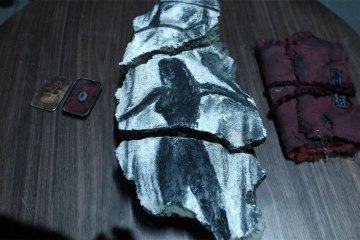
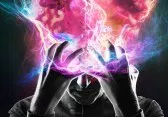
Jarring, jittery and superb, Mindhunter cements its place as a classic. Every little detail, even down to the Rorschach-like television poster is gorgeously done. Fincher’s direction is gloomy yet merciless. Rooms are too big, quite like the situation Bill and Holden are engulfed by. And it’s a welcome, sharp contrast to Holden’s insatiable hope.
However, Joe Penhall’s practically cramming in quotables. Whilst the near-pretentious dialogue (who speaks like that?) is overshadowed by McCallany and Groff’s exceptional performances, it sticks out like a sore thumb. Its dedication to the period, though, with 10cc’s I’m Not in Love in the faint background and the soaring, ominous backdrop is wonderful work by Jason Hill. And the dreamy cinematography by Christopher Probst masterfully tricks us into forgetting the darkness of this story.
But it’s the longevity of the show that’s worrying. A miniseries on Netflix would’ve been short, sweet and impactful. Just like a David Fincher film. From what we’ve seen of Mindhunter, it’s flawed but it’s also sheer quality. Should Mindhunter fall down the Once Upon a Time drain by prolonging its life to pitiful stages, then it’d be a damn shame.
Now let’s stop daydreaming of a David Fincher drama channel and get back to binging the episodes, shall we?
MINDHUNTER is now available to stream on NETFLIX.
David Fincher is synonymous with the word ‘masterpiece’ and this is no difference. The cleverness of putting it on Netflix? It means you can gorge on all of it…repeatedly. Stay with us here for our Mindhunter analyses articles and livetweets!Inhumane are serial killers, yet paradoxically they are still human. The disturbing exploration of that is unsettling, but it’s the truth nobody wants to hear yet needs to.


Younger Roundtable: Big Little Liza is full of lies and a big (not-so-little) commitment

Cloak & Dagger Roundtable: You Hadn’t Met Me Yet